
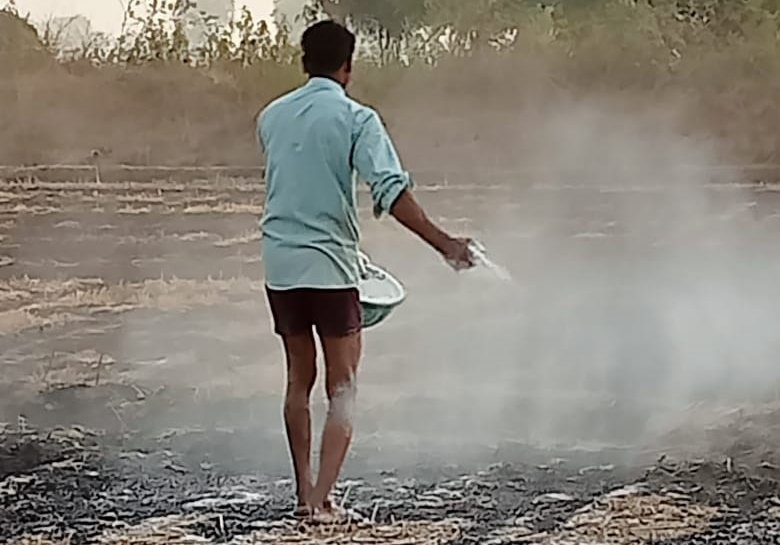
The unconventional practice of stubble burning continues despite repeated calls from environmental scientists for its cessation.
The winter harvest season in November and December is one of the major contributors to air pollution. For reasons such as failed crop output, time and money constraints, and low market prices, farmers set fire to their crops to quickly clear their fields. In cold weather and low wind conditions, a meteorological phenomenon known as temperature inversion makes it difficult for pollutants to disperse and rise, resulting in thick smog. The toxic fumes from the agricultural fields when combined with already high carbon emissions in the city exacerbate air pollution in the national capital, Delhi, thereby causing adverse impacts on health and huge economic losses.